THE PROBLEM
Despite covering just 0.03% of Earth’s surface, Costa Rica contains roughly 5-6% of the world’s biodiversity. However, most of the knowledge about this biodiversity and how to use it reside in the elderly population. With Costa Rica’s continuously aging population and shift to supermarket and fast food culture, this heritage knowledge is at risk of being lost foreverMy team was brought on by the Parque La Libertad to work directly with elder volunteers in the Parque’s community garden to design a replicable system for elders to pass on their heritage agronomic knowledge to youth.
UNDERSTANDING THE CONTEXT
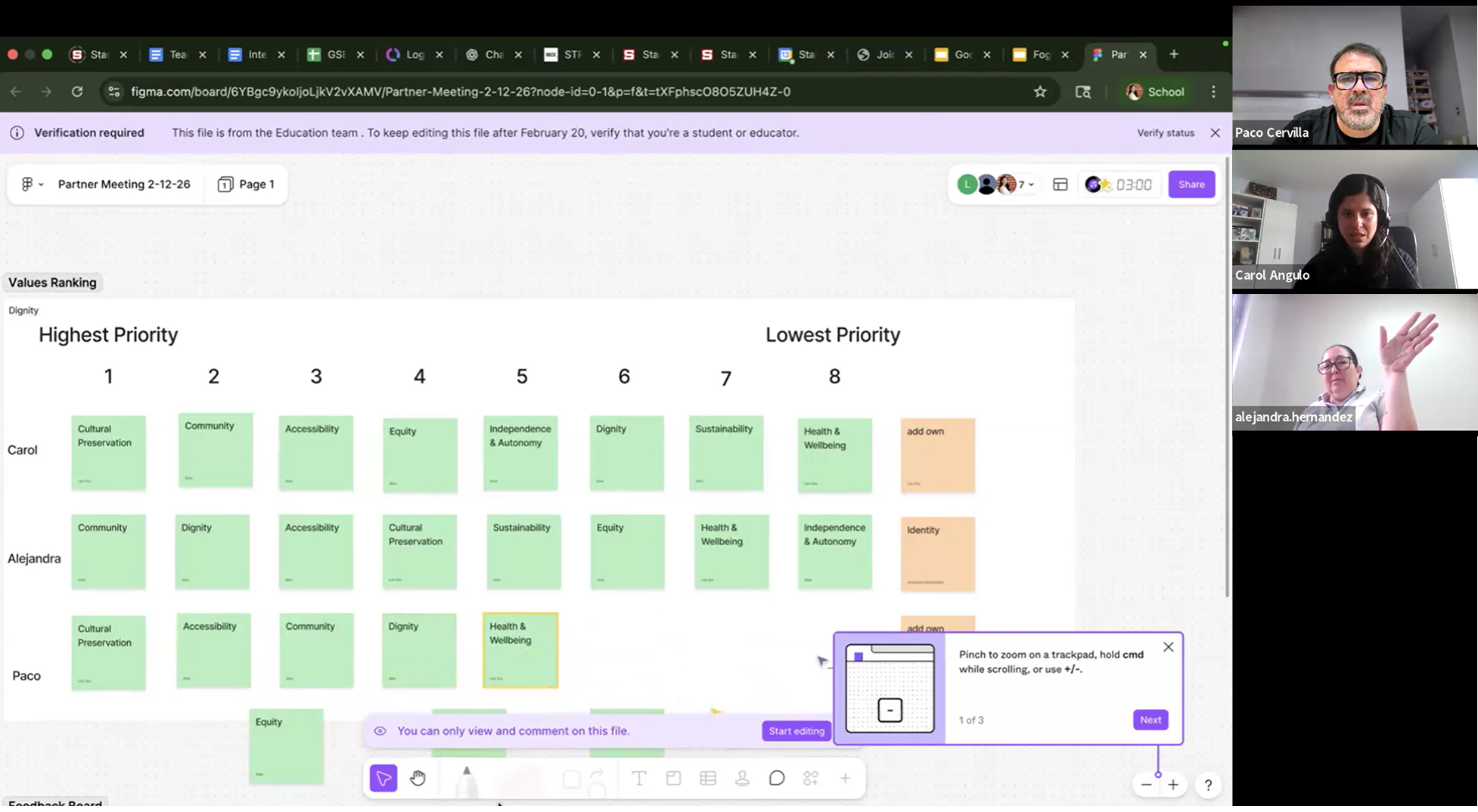
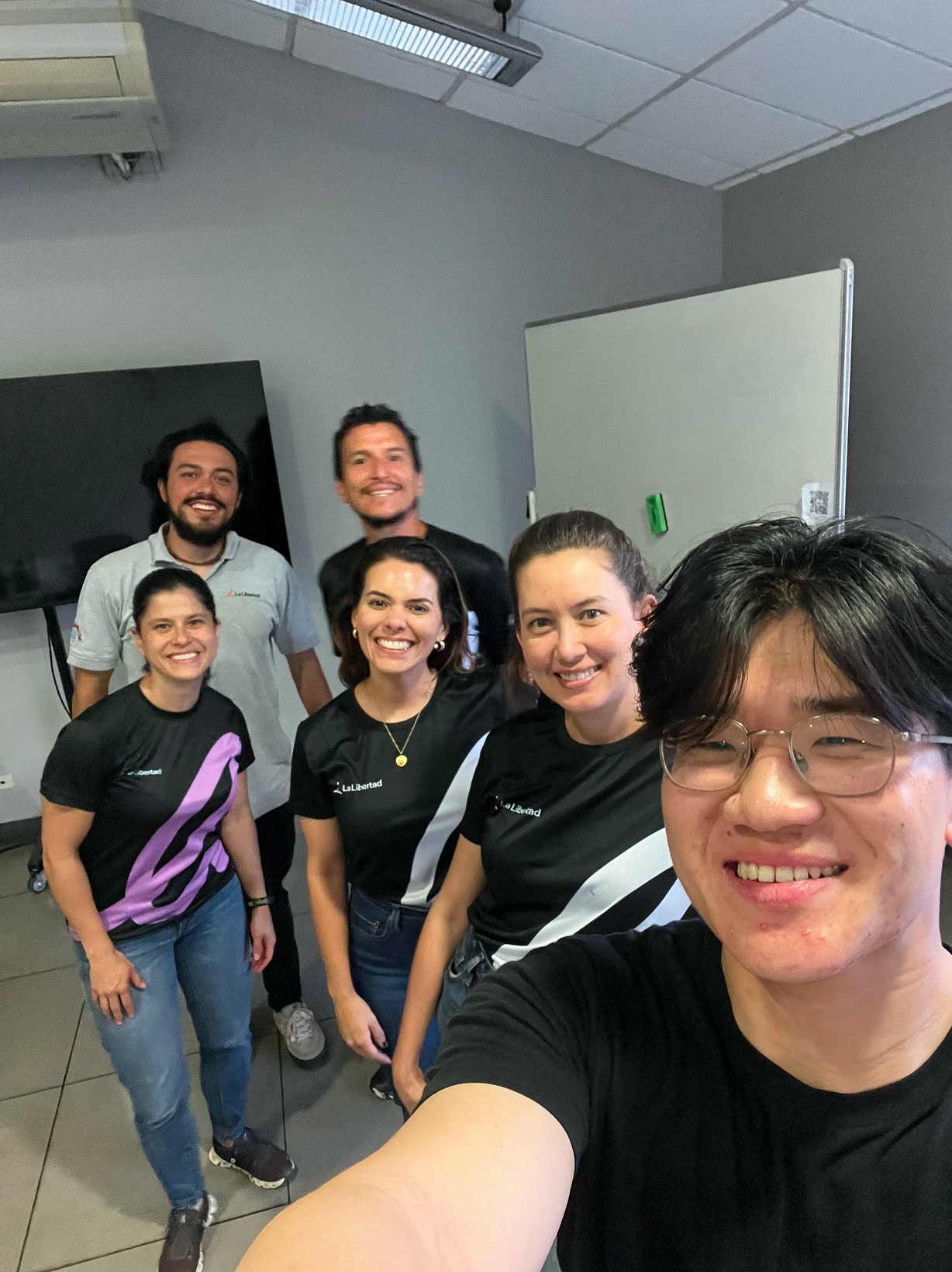
Before even digging into the problem, we had to understand who we were working with: their background, what their motivations were, and what systems were already in place. We had many virtual meetings with both the Parque La Libertad (as seen below) as well as the garden's volunteers.
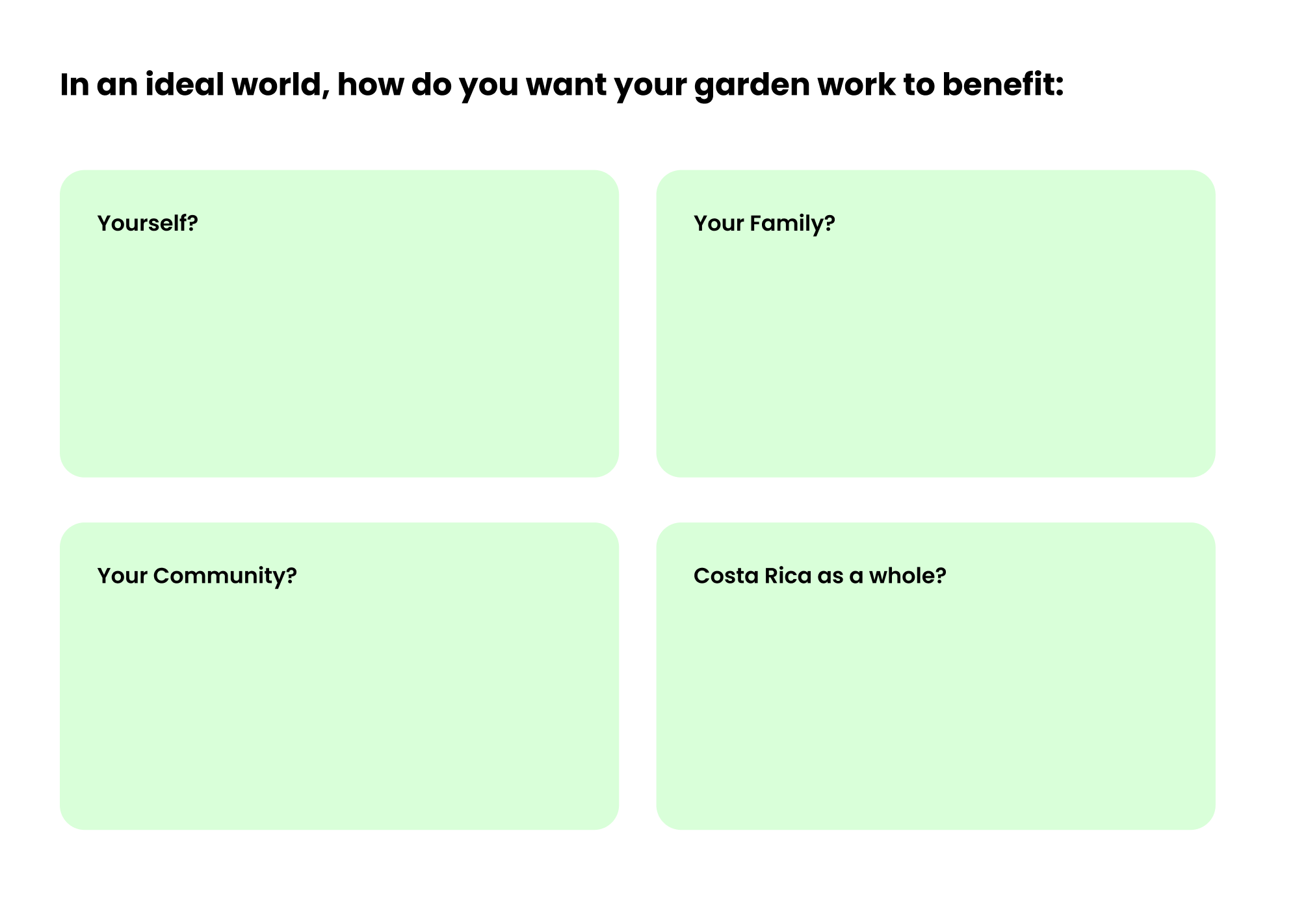
Considering the language barrier, I designed some conversational aids for our meetings with the Parque’s program managers and the garden’s elders. For example, this activity was used during a group interview with ten elders, designed to help us identify what personal stake they had in this project.
Our early insights gave a jumping point for the meat of our needfinding. Key findings were:
1.
Elders get fulfillment from serving their immediate community, where they can be more face-to-face.
2.
New volunteers, especially youth, are difficult to onboard due to the lack of a formal training process
TRAVEL
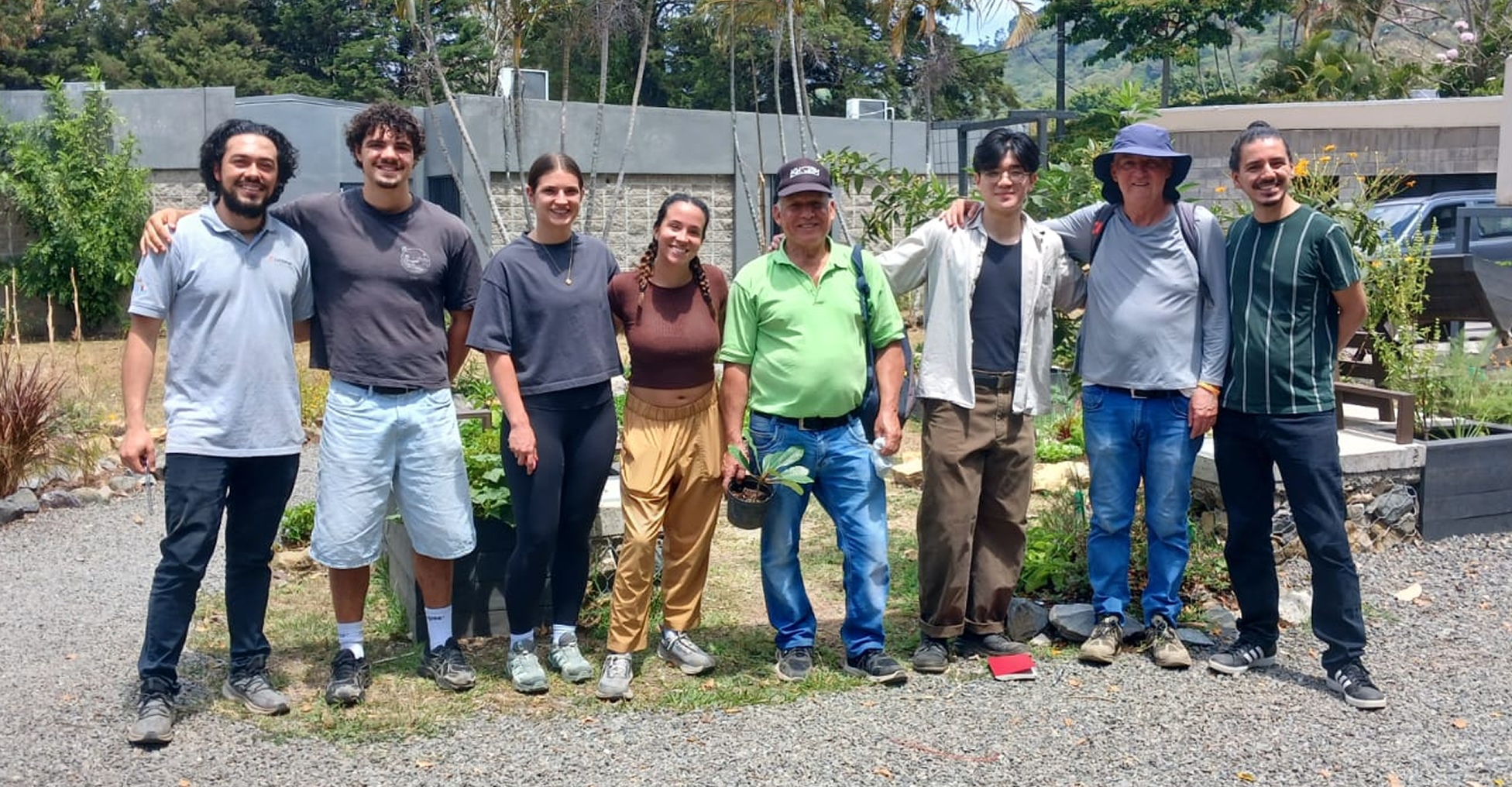
The bulk of our insights and community immersion happened in a two-week trip to Costa Rica, providing an incredible opportunity to co-design and build friendships with our partners.
During the trip, we focused on four types of activities:
1. Group hands-on sessions
The goal of these was to understand the culture of the entire group, and to make sure our solution would align with their community and way of working.
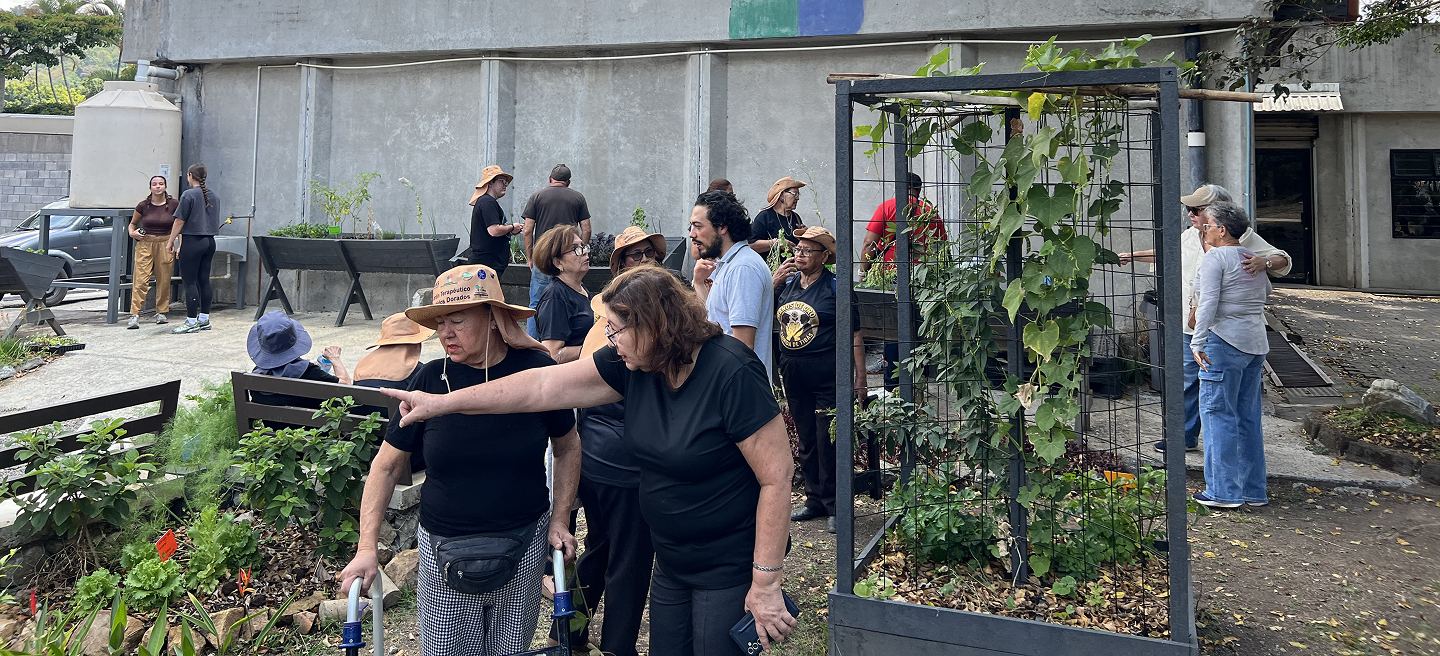
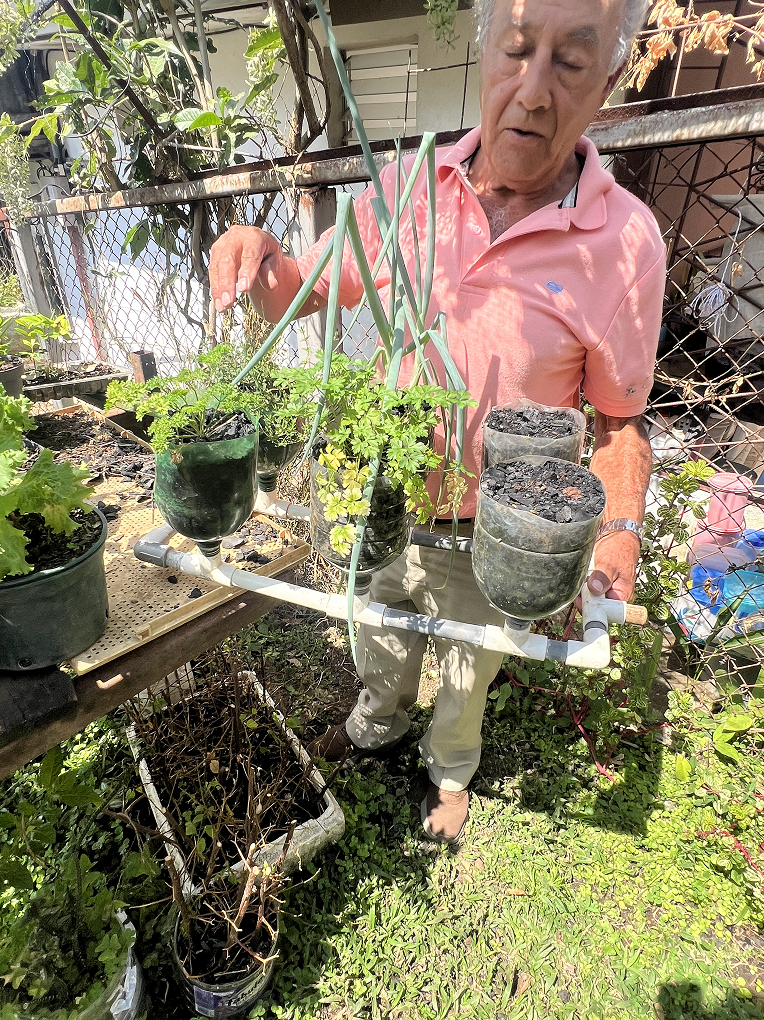
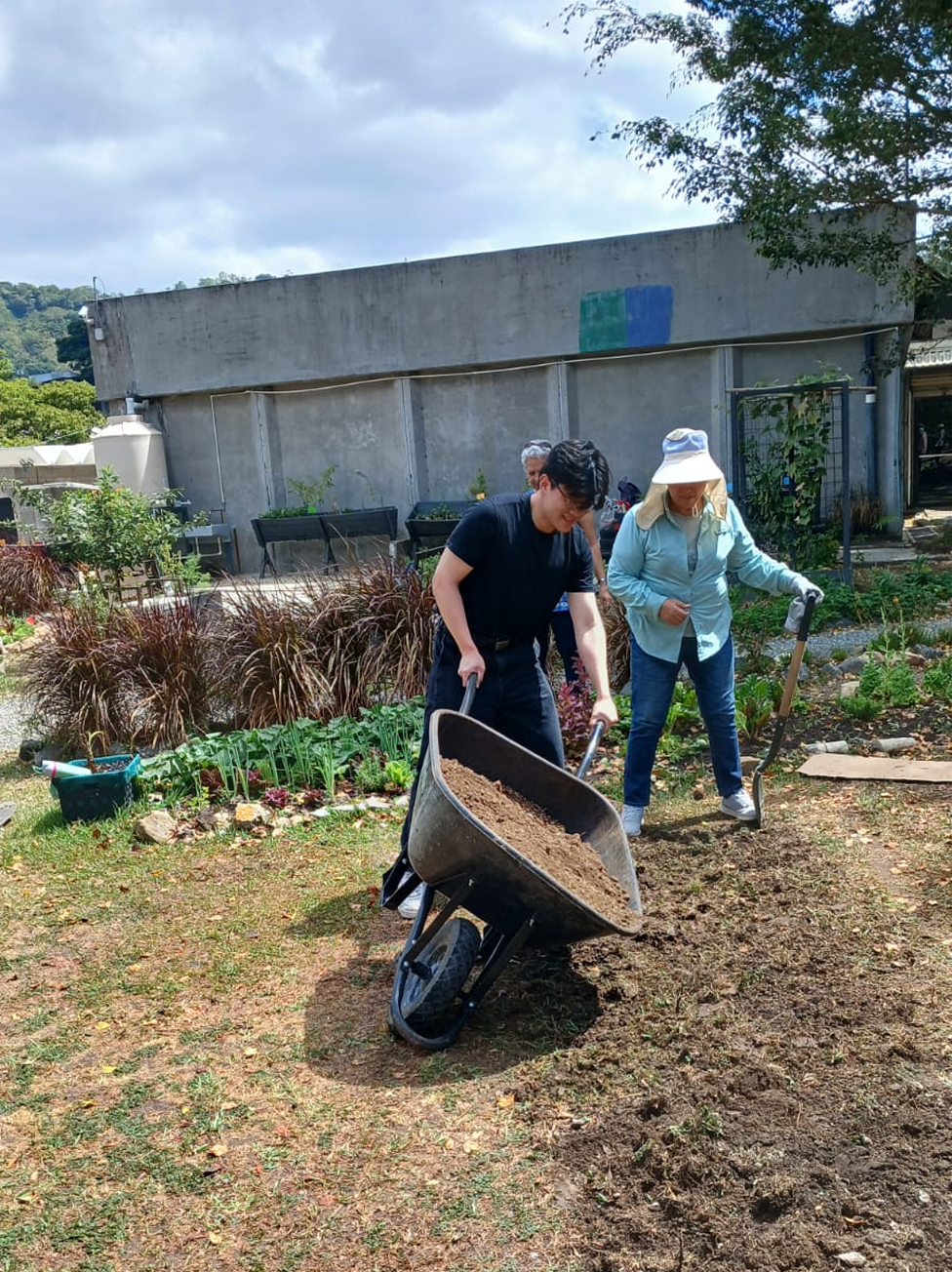
We first joined in on a gardening session. Those observations led to our first insight:
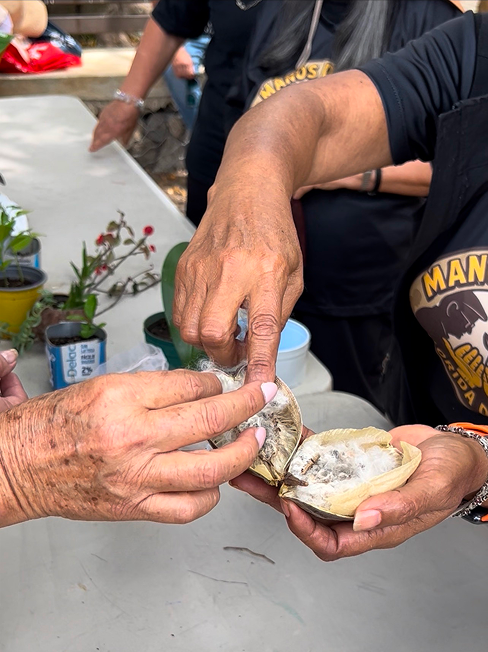
INSIGHT: Elders teach about agronomy through SENSORY means.
They teach each other about plants through touch, taste, and smell, and they express care through physical gifts.
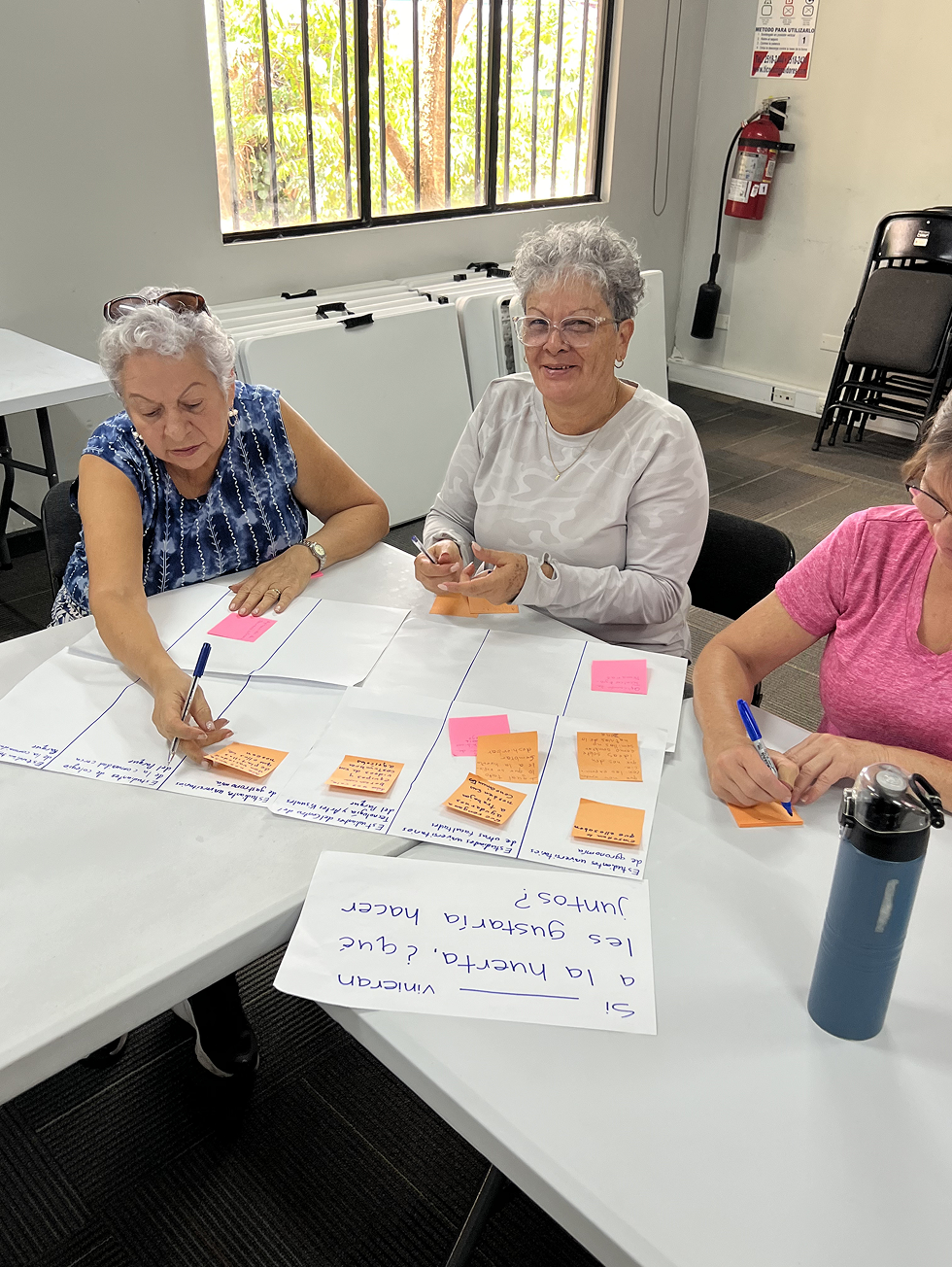
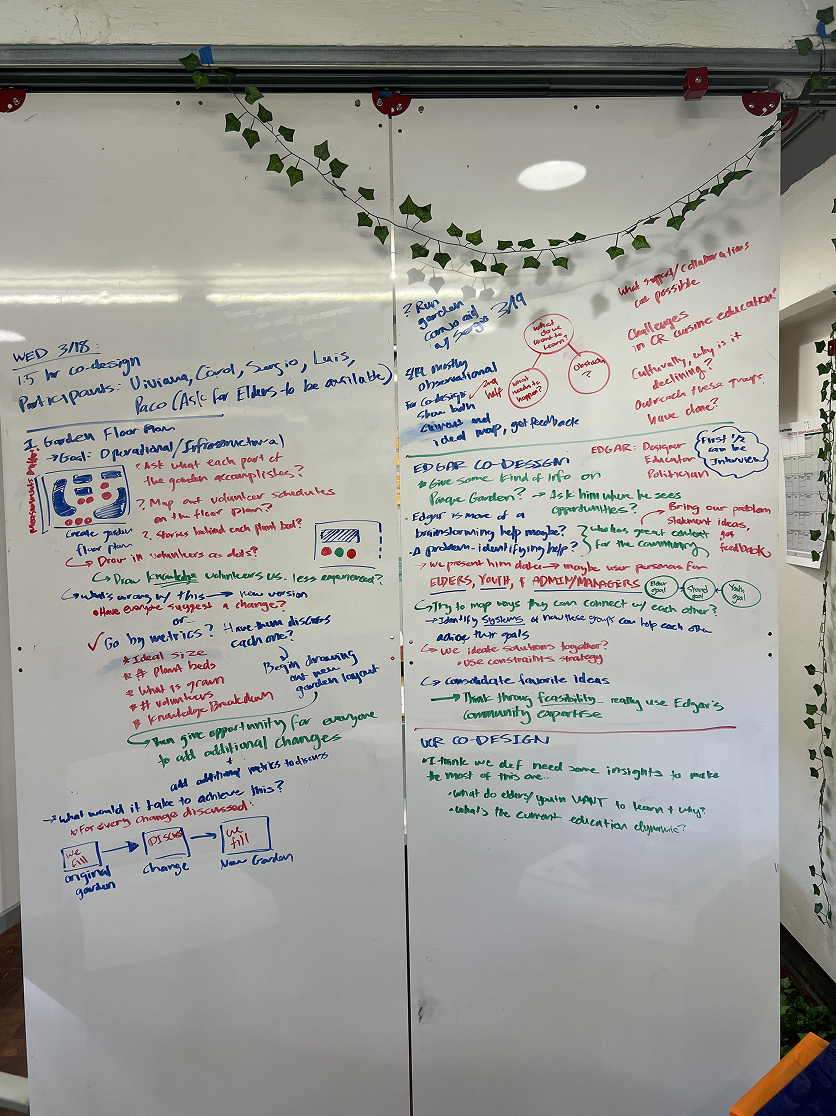
We later ran a brainstorming session with all the elders to understand what youth group would align best with the elders.
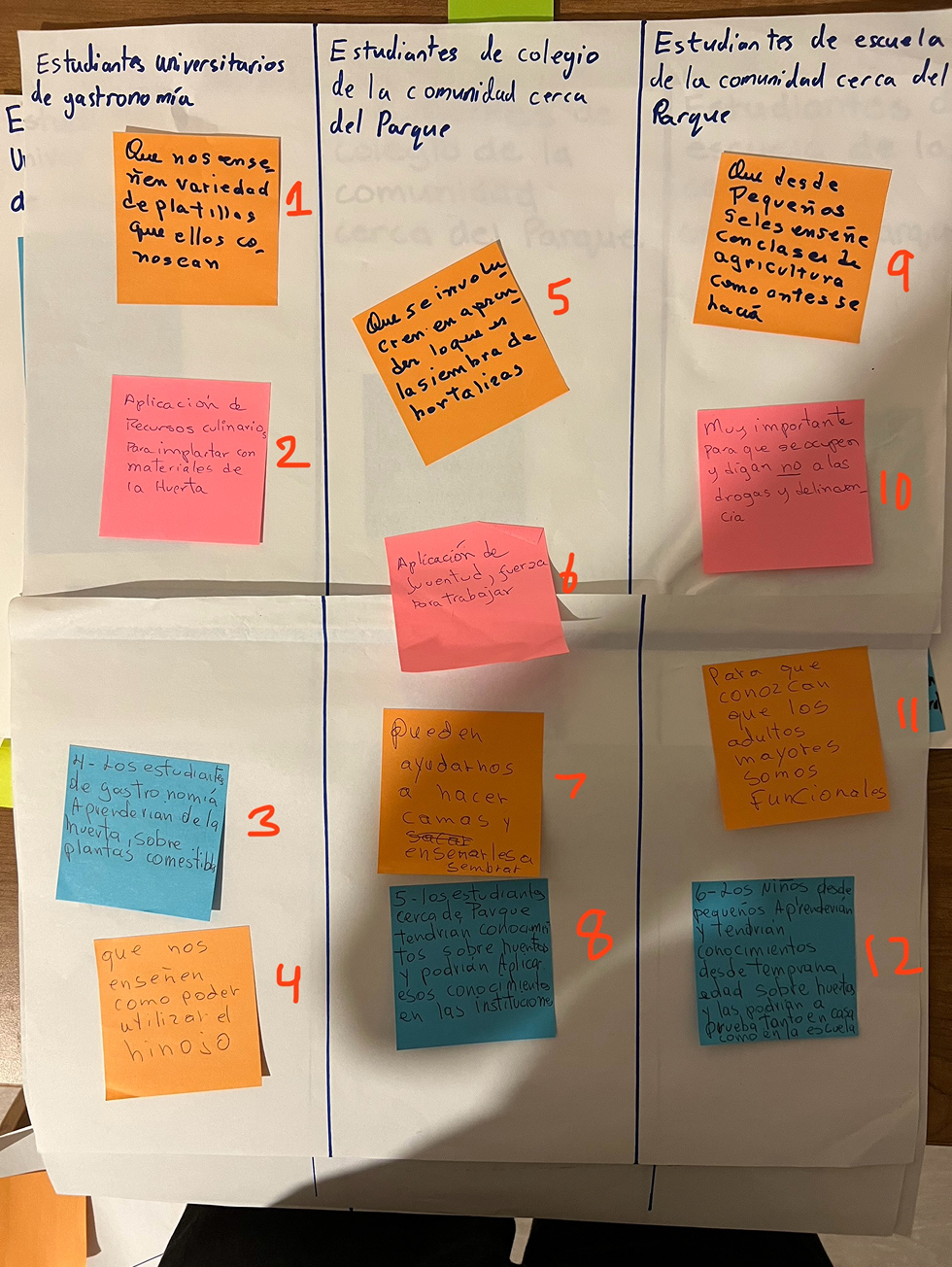
I designed this activity, where elders would ideate on what intergenerational activities they would like to do with different age groups.
INSIGHT: Elders love LEARNING as much as they love teaching, and they feel YOUNG ADULTS would be able to teach them something in return the best.
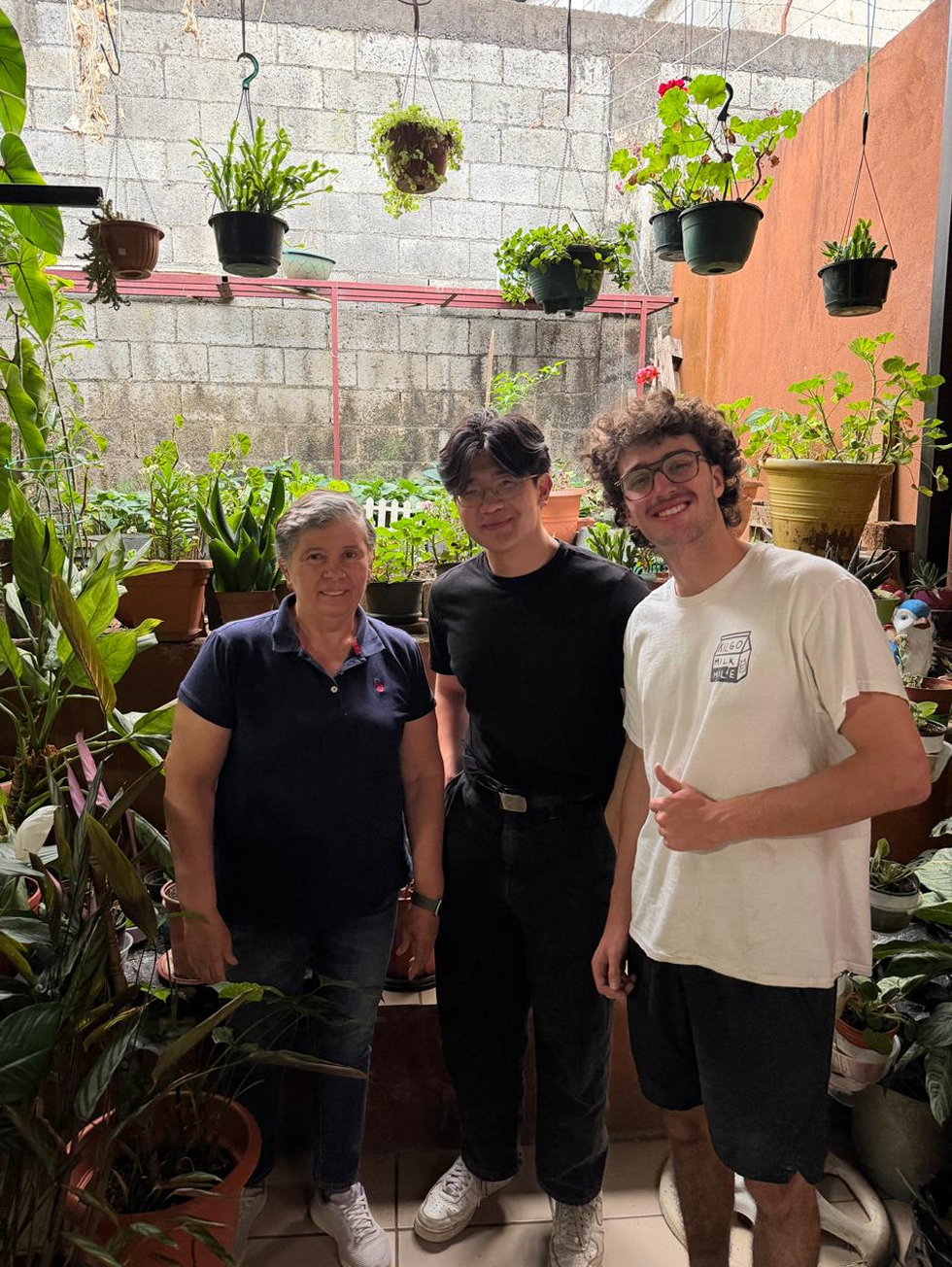
2. One-on-one sessions with elders
During the trip, I devoted substantial time for one-on-ones with some of the elders from the garden.
After five of these conversations, each lasting several hours, I identified a root cause for why youth and elders struggle to form close relationships:
INSIGHT: Elders love learning for the sake of learning, but feel judged by youth for picking up on things too slowly.
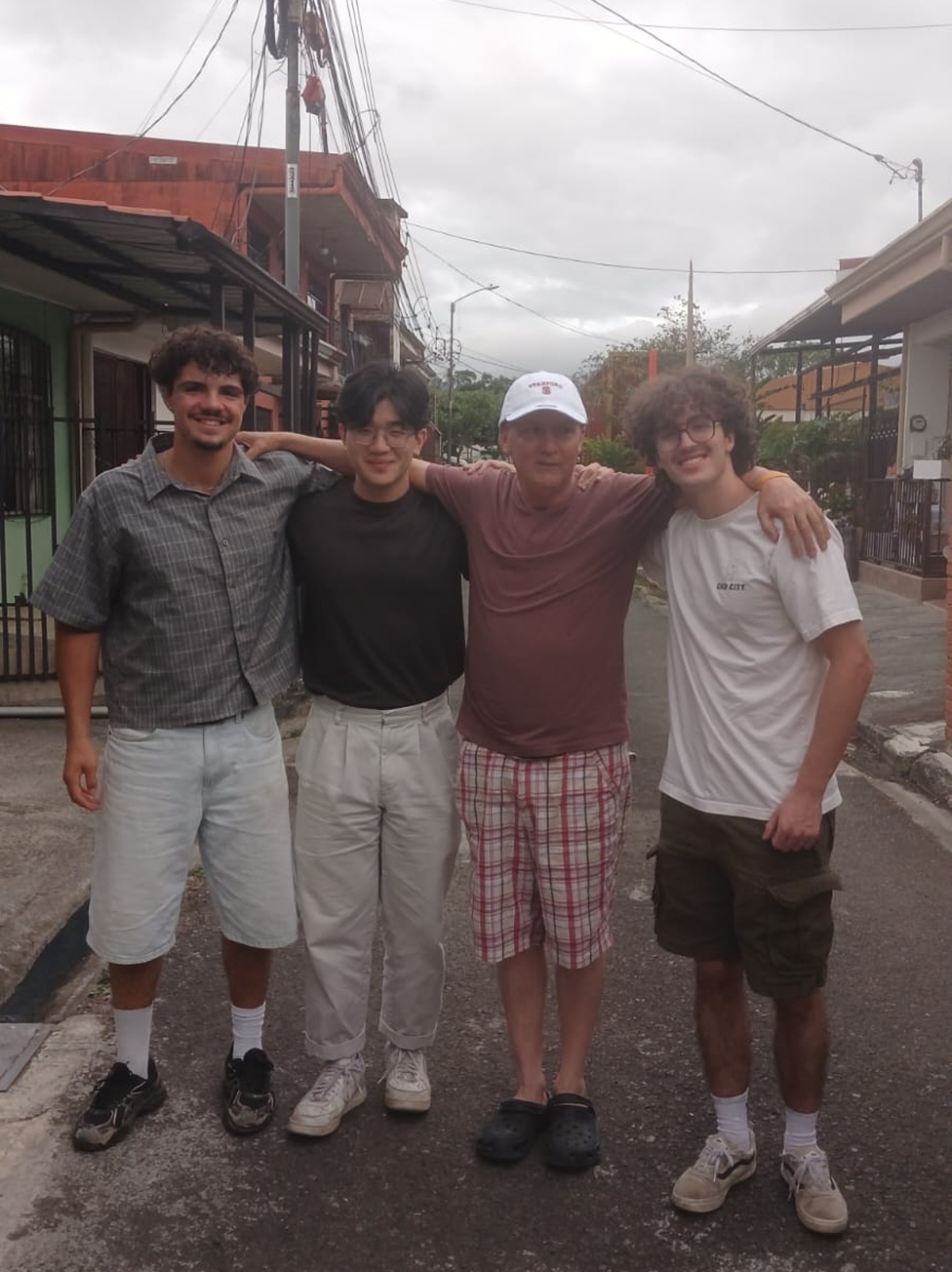
3. Conversations with youth
Our conversations with the youth had two goals.The first was understanding the rift between elders and youth, this time from the youth’s perspective.
Our conversations revealed a similar insight to the elder’s perspective:
INSIGHT: Costa Rican youth are results-oriented due to academic and professional pressures, so learning must be efficient and have a payoff.
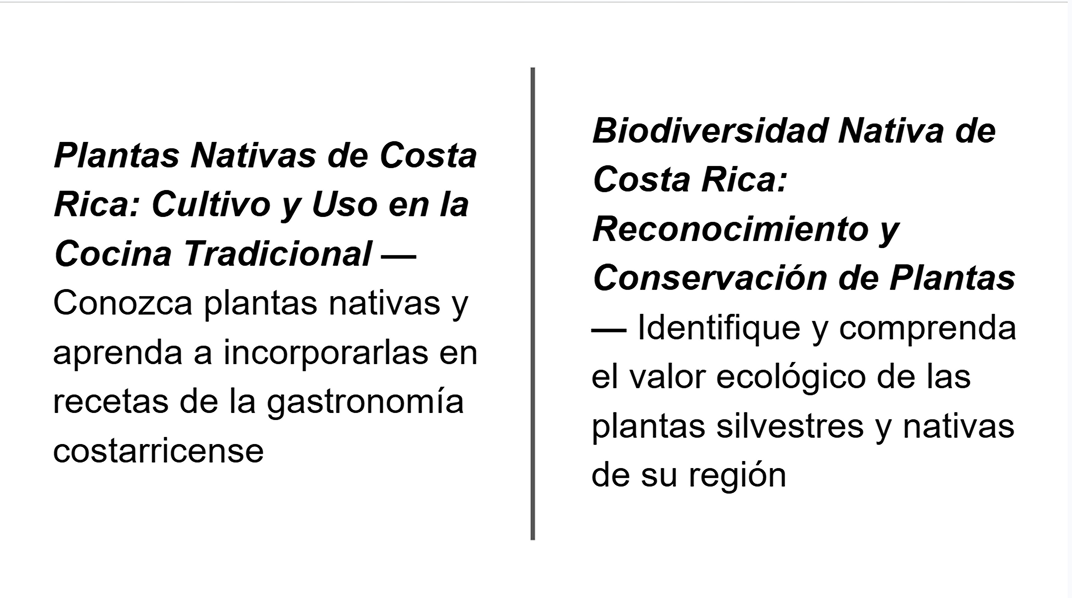
The second was gauging interest in learning about agronomy, and if so, what aspect of it. To get authentic responses, I designed an activity where youth would choose between two hypothetical courses.
For instance, these two courses identify whether youth find learning about agronomy more interesting in a food context.
We found that learning from elders had the appeal of stories and authenticity, and a sense of digital fatigue made them eager for the hands-on learning that elders prefer.
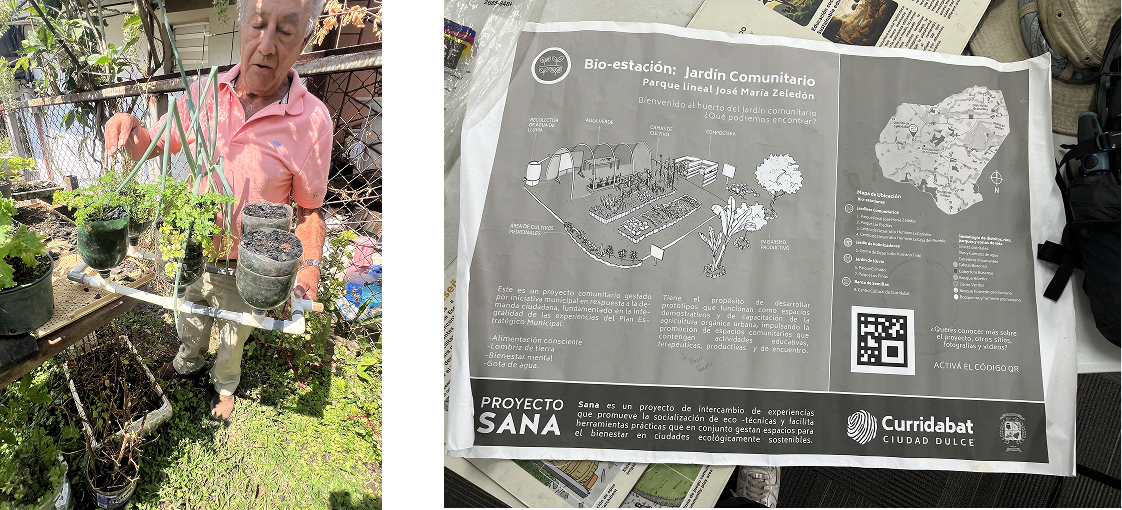
4. Conversations with people working on similar projects
During the trip, I devoted substantial time for one-on-ones with some of the elders from the garden.
After five of these conversations, each lasting several hours, I identified a root cause for why youth and elders struggle to form close relationships:
Two of the biggest insights from these sessions were:
INSIGHT: A sense of ownership and responsibility, be it over a plant or over knowledge, motivates community engagement.
INSIGHT: A sense of ritual, created by a regular cadence, is critical for making a community feel like a home.
With the insights from our trip and many revisions in between, we landed on our final problem statement:.
“Elder volunteers at the Parque Garden with knowledge and experience in gardening and agronomy need shared spaces where they can use their knowledge to teach and lead younger generations because the act of mentoring youth awakens a sense of being the keeper of irreplaceable community knowledge that puts elders in a position of purposeful leadership.”
IDEATION
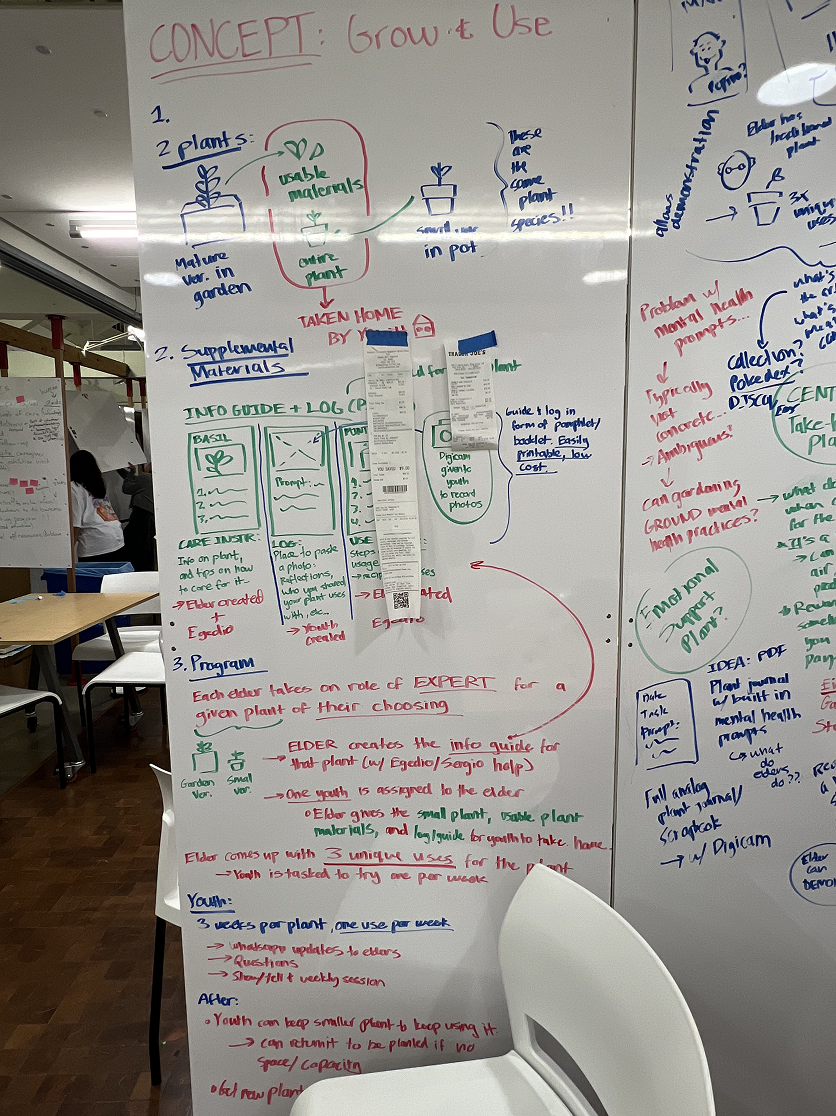
In total, we cycled through around 45 unique ideas for intergenerational activities.
From there, we were able to narrow down our ideas to the two we felt were most promising:
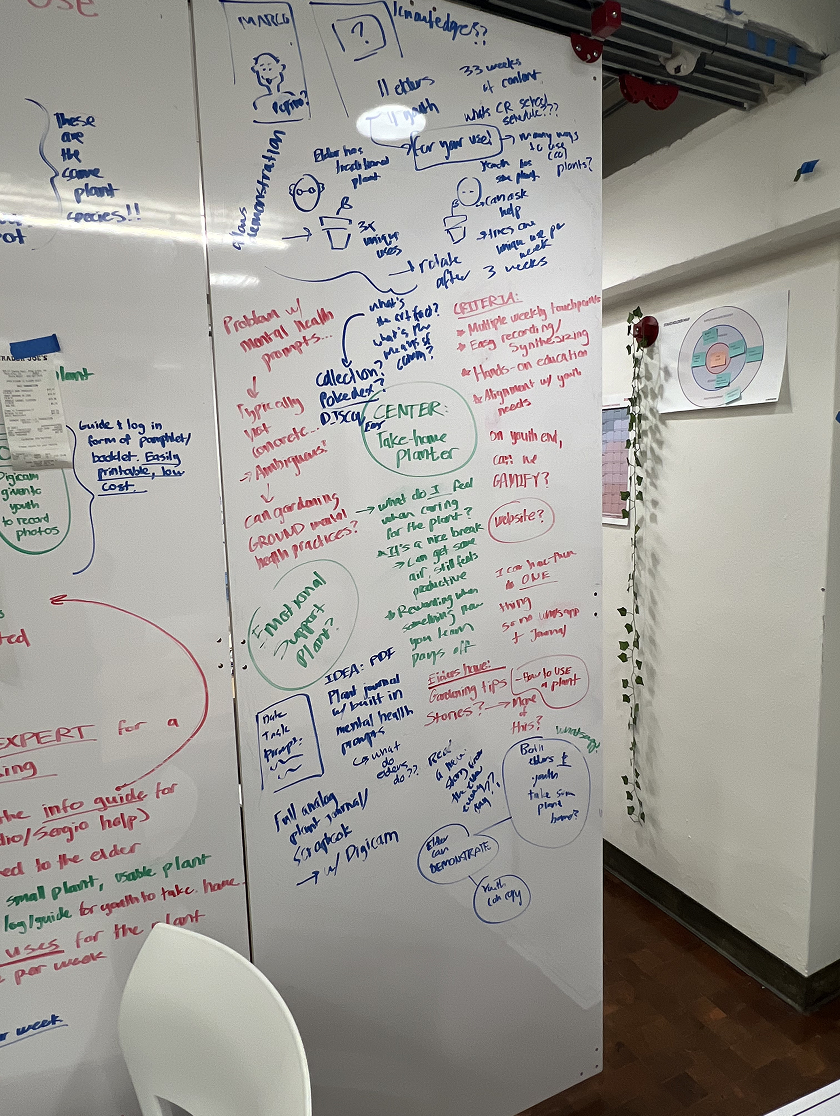
Get sent on missions about using plants for mental health
What is it:
Elders send youth a daily de-stressing activity to try, directly tied to nature and agronomy.
Rationale:
In addition to gardening knowledge, elders have a trove of well-being practices, which aligns with youth’s need to de-stress and ground themselves.
%201.png)
%202.png)
Take home planting and cooking mentorship program
What is it:
Youth take home a potted plant to care for and use in cooking, texting an elder mentor to ask for guidance and give updates.
Rationale:
Gives youth a sense of responsibility and ownership, and creates stronger relationships by providing multiple communication touchpoints throughout the week
TESTING
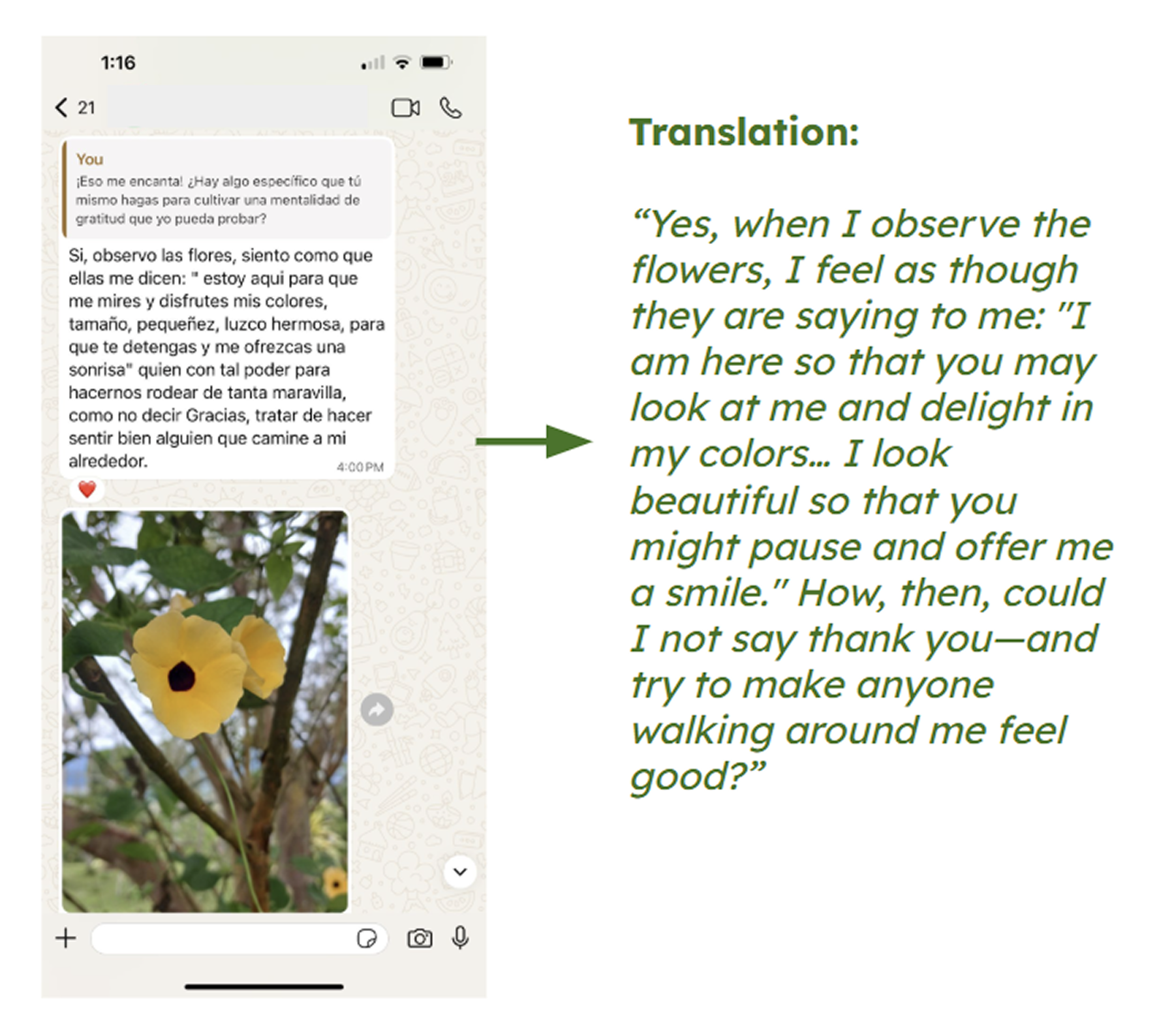
For the daily mission activity, I ran and designed a one-week pilot, setting up a Costa Rican youth with one of the elders and checking in on how they were feeling at the end of each day.
It turned out that the elders were more inclined to give long-term advice on developing a healthy mindset over time, not necessarily the immediate mental health practices that youth actually needed.
Though still valuable, we scrapped this idea due to that mismatch.
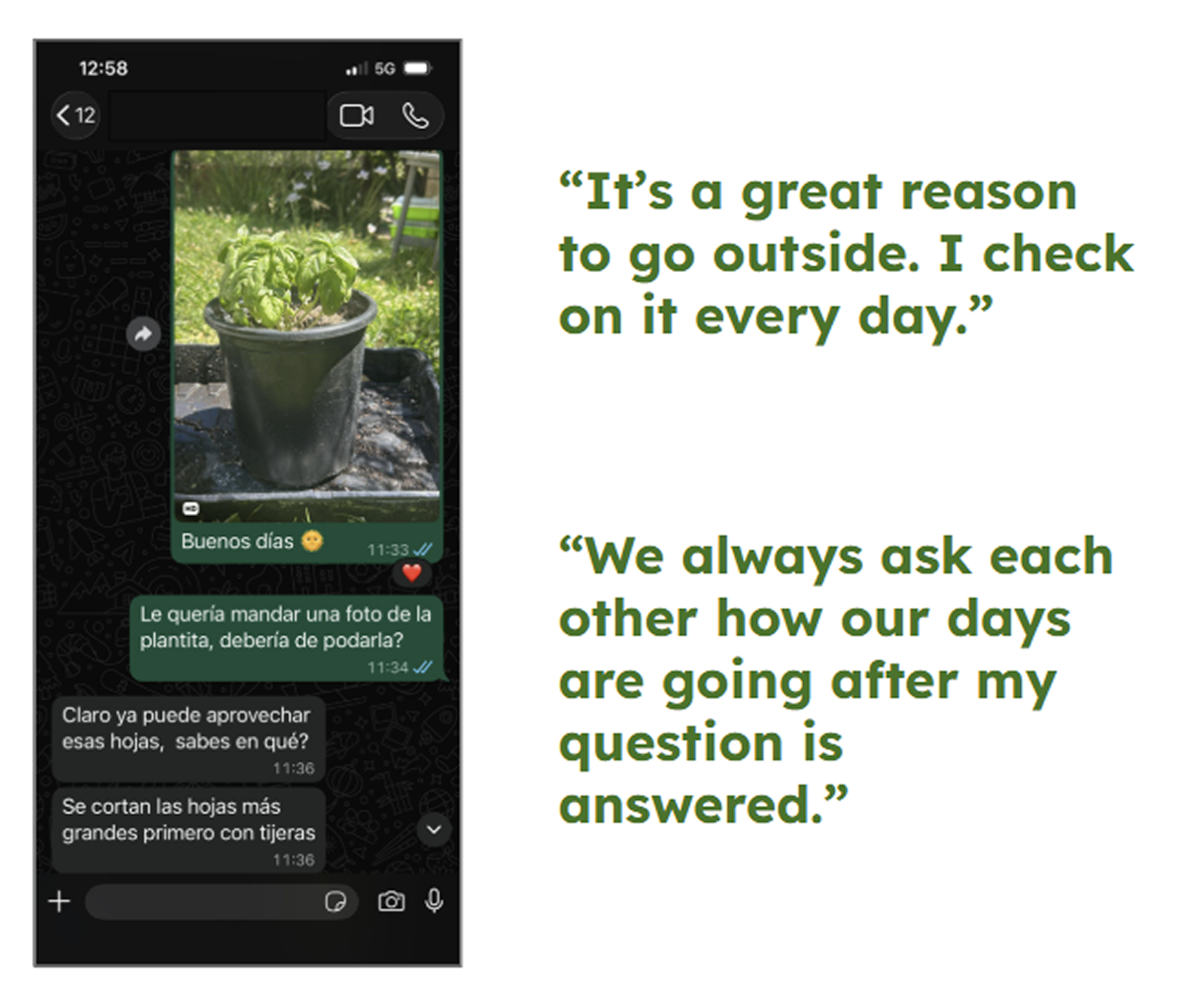
The home gardening and cooking idea ended up being the strongest. I also designed a one-week pilot for this idea, setting up a youth with a basil plant and partnering them with an elder.
We found the responsibility of taking care of a plant led to greater engagement with their elder mentors, and even with just a week, a strong enough relationship was built that the elder and youth continued their communication beyond the duration of the pilot.
ITERATION
Even with its strengths, the home gardening idea wasn’t perfect. Three main issues emerged:
1. On our partner’s side, they wanted knowledge to not only be transferred, but recorded as well.
2. On the elders’ side, they felt the program lacked any opportunity for them to learn anything from the youth.
3. And from the youth perspective, plants didn’t change enough day-to-day to warrant regular communication with their elder mentors
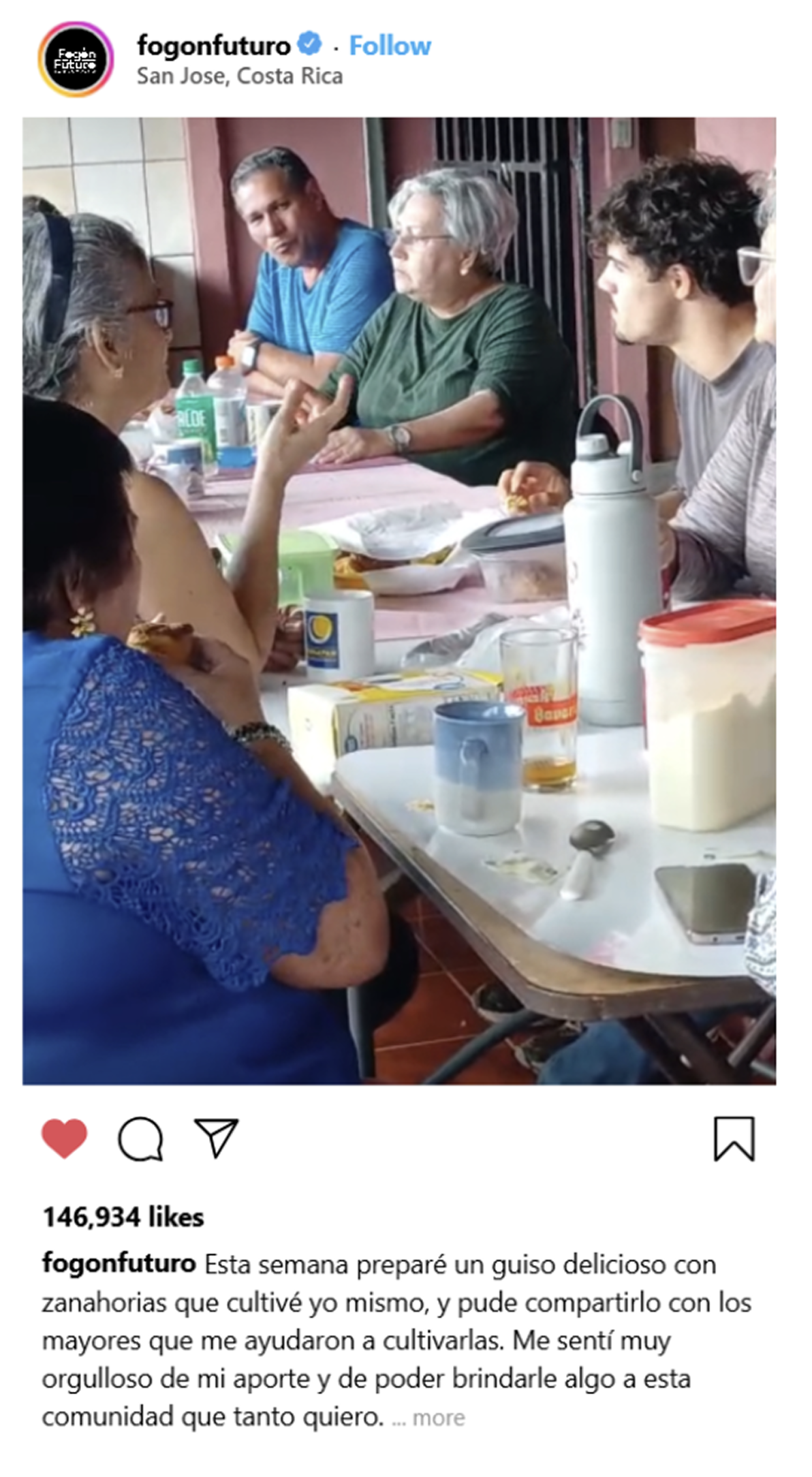
To address these, we added a social media component. Each week would be cadenced by a collaborative reflection between the elder and youth, telling a story of the challenges they overcame and how their bonds and relationships grew stronger from it.
“The biggest problem you encountered and how you solved it?”
“How you shared what you learned with your loved ones?”
”A story about how you worked with your elder?”
The youth would publish it to a shared social media page, crystallizing the information and communicating to the broader community how heritage gardening knowledge can build bonds and friendships around itself.
PLANT HANDBOOK
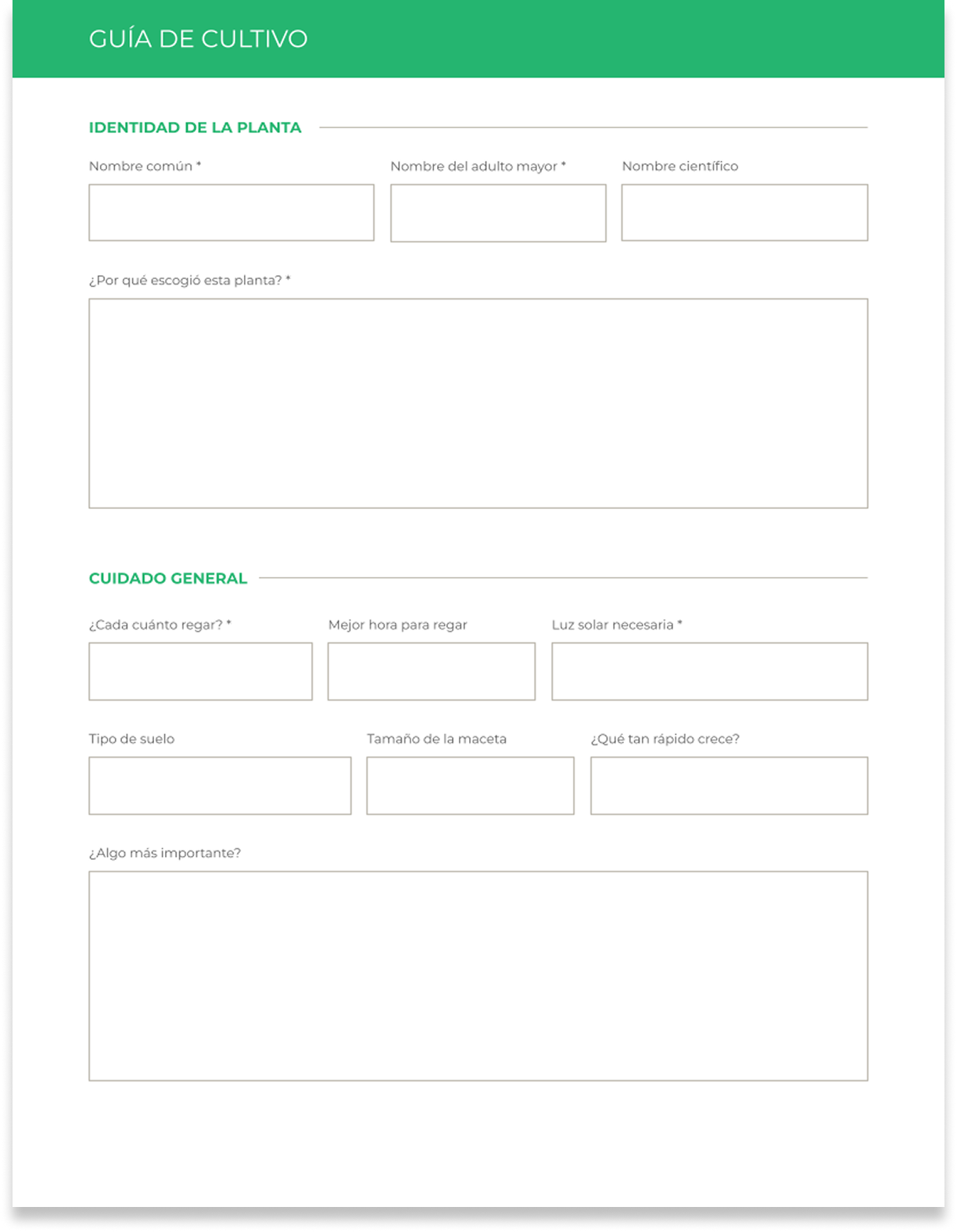
From a logistical standpoint, I determined that recipes with images would be inconvenient to try and send over text. Additionally, some simple information like how often to water or how much sun a plant needs would be frustrating to ask instead of just searching online.
To address this, I created a plant handbook template the elders could fill out with recipes and basic care information for a given plant that would be given to the youth at the start of the program.
I co-designed the content of the forms with the garden’s head educator, to ensure the most critical information for plant care was captured.
FINAL PROGRAM FLOW
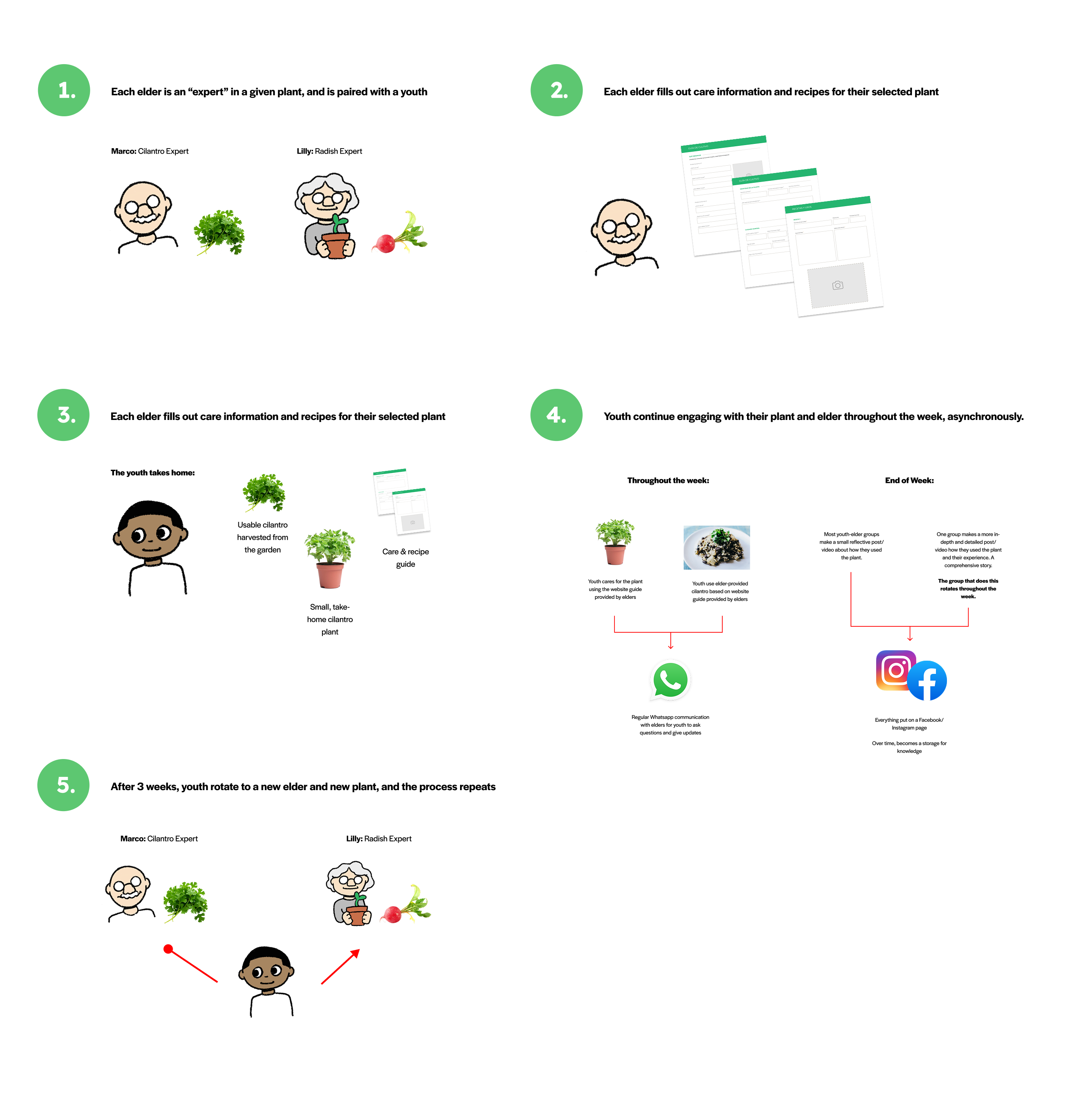
With that, here’s a visualization of the entire program. At this stage, we added a rotation system where youth would swap elders and plants every three weeks.
IMPLEMENTATION
Though the structure of the program was solidified, the Parque La Libertad had a very small budget they could allocate to this project, so we had to figure out small changes to bring our costs down.
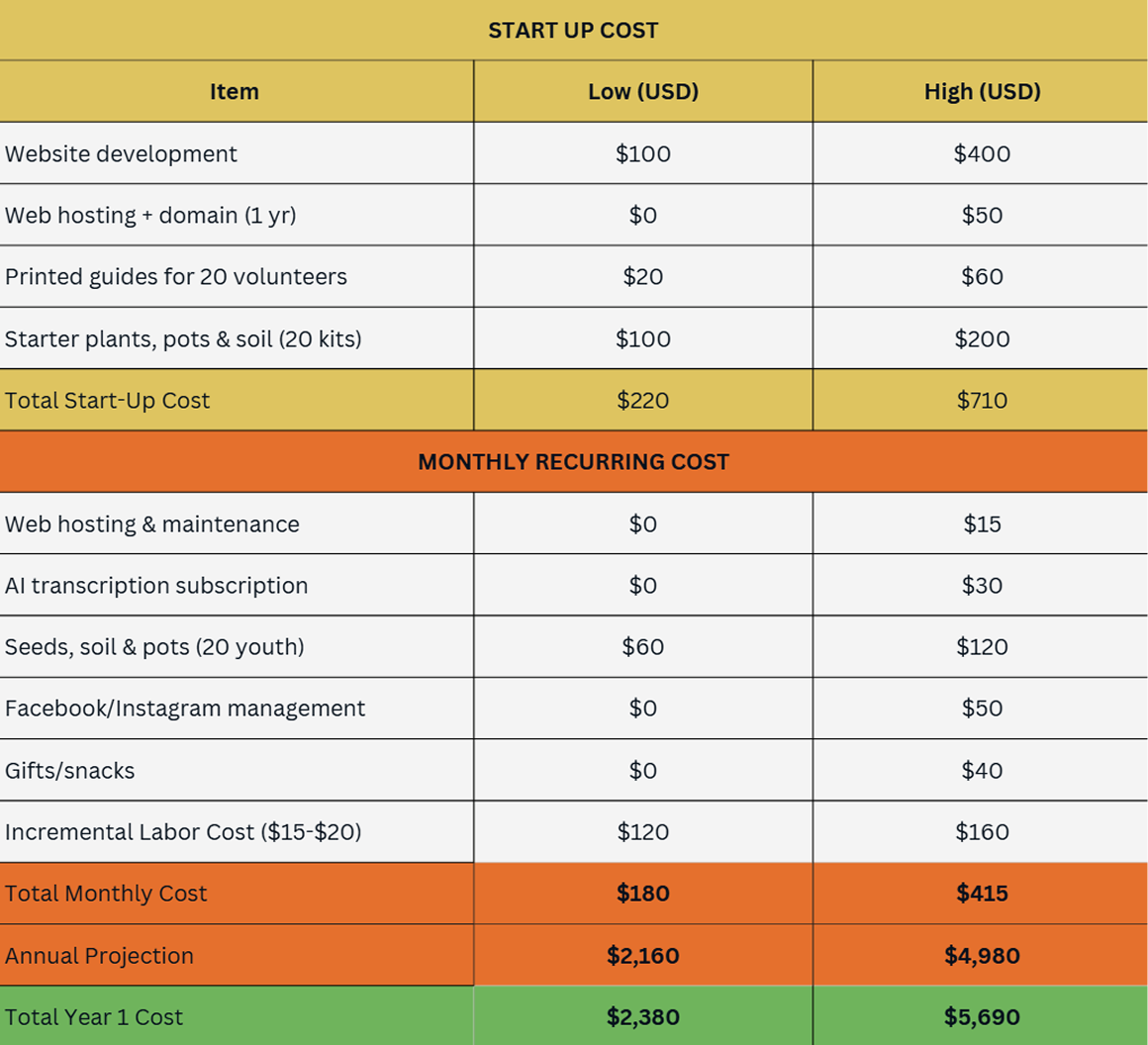
Some key decisions included:
Source youth who are already taking courses at the Parque
Substantially reduces marketing, interviewing, and onboarding costs.
Having two elders per youth
Halves the number of plants that need to be procured, the biggest expense of the program.
BRANDING
The Parque La Libertad already has a well-established brand and visual identity, but the program still needed a name and logo.
I chose the name Pejibaye, the “peach palm fruit.” It’s a traditional fruit of Costa Rica, often served cooked with a dollop of mayonnaise. Since the palm tree it grows on is so resilient, it’s often planted by a family as a gift to its future generations.
%201.png)
For that reason, the Pejibaye felt like the perfect namesake for this program.
NEXT STEPS
The first full pilot of this program will run from August to November 2026. The key metrics we’ll be monitoring are:
1.
Deliverables Engagement Rate
What percentage of youth submit their weekly reflections throughout the program?
2.
Retention Rate
What percentage of youth/elders remain in the program for the entire duration?
In addition, a weekly survey will be sent out to both youth and elders, gauging how much they’re learning, how they’re feeling towards each other, and generally how well the program’s content is aligning to their needs. Continuous changes will be made throughout the program as feedback comes in.

%201.png)
%201.png)